Importing or exporting goods involves more than arranging transportation and preparing shipping documents. Businesses must also understand the Customs declaration requirements that apply to their shipments.
In Singapore, many import, export and transhipment activities require the appropriate Customs permits, generally obtained through TradeNet before the relevant cargo movement or clearance activity.
For companies handling international shipments, preparing these declarations can become increasingly demanding, particularly when shipment volumes grow, documentation is incomplete or different regulatory requirements apply. This is where a professional Customs permit declaration service in Singapore can help. Rather than managing every declaration internally, businesses can engage a declaring agent to prepare and submit permit applications on their behalf.
But when does outsourcing make sense? What responsibilities remain with the importer or exporter? And how should a business choose a declaring agent This guide explains how Customs permit declaration outsourcing works in Singapore, the situations where it may be beneficial and the important considerations before engaging a service provider.
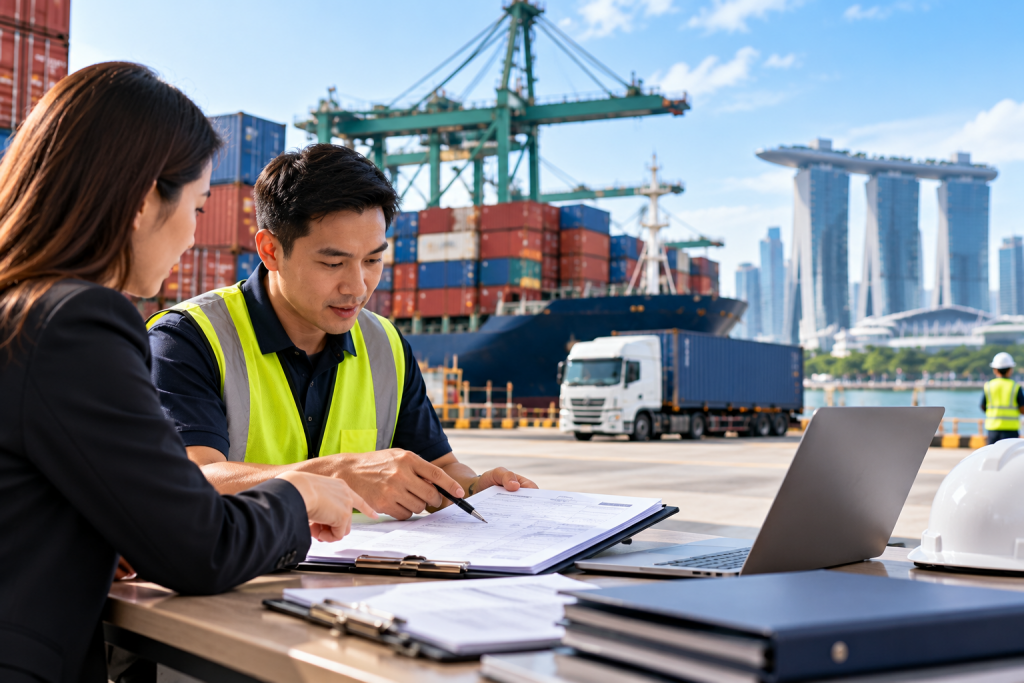
What Is a Customs Permit Declaration Service?
A Customs permit declaration service assists businesses with preparing and submitting declarations required for the movement of goods into, out of or through Singapore.
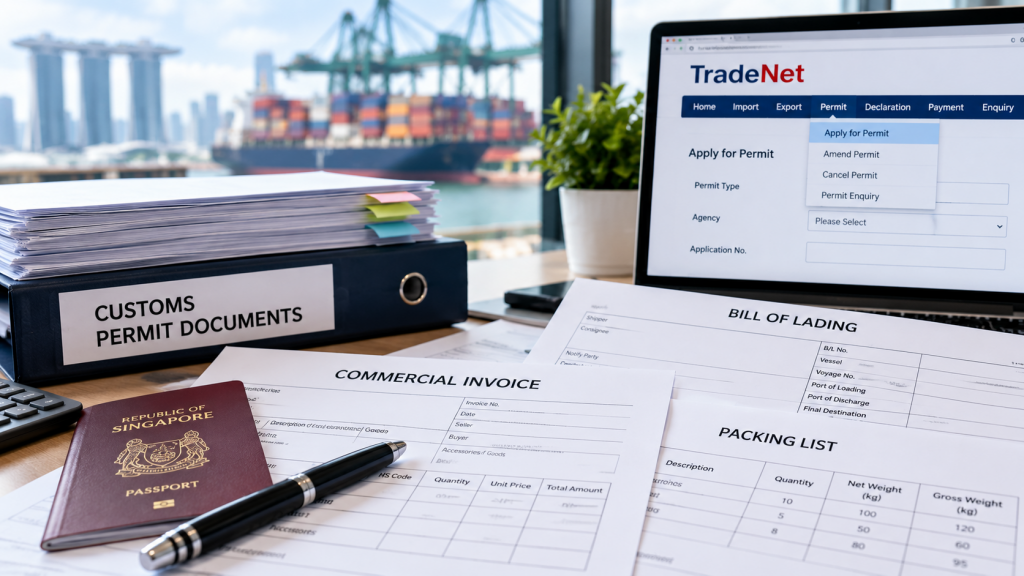
Most Customs permit applications are submitted electronically through TradeNet, Singapore’s national single-window platform for trade declarations. Depending on the goods and transaction, permit applications may involve Singapore Customs and other competent authorities.
A declaring agent generally helps businesses with activities such as reviewing shipment documents, preparing declaration information, identifying applicable permit types, submitting applications and communicating declaration-related issues. However, engaging a declaring agent does not automatically transfer every legal responsibility away from the importer or exporter. Traders must still provide accurate information, comply with applicable requirements and maintain the records required for their transactions.
How Customs Permit Declarations Work in Singapore
Although the process varies according to the shipment and permit type, a typical declaration involves several important stages.
Step 1: Identify the Nature of the Shipment
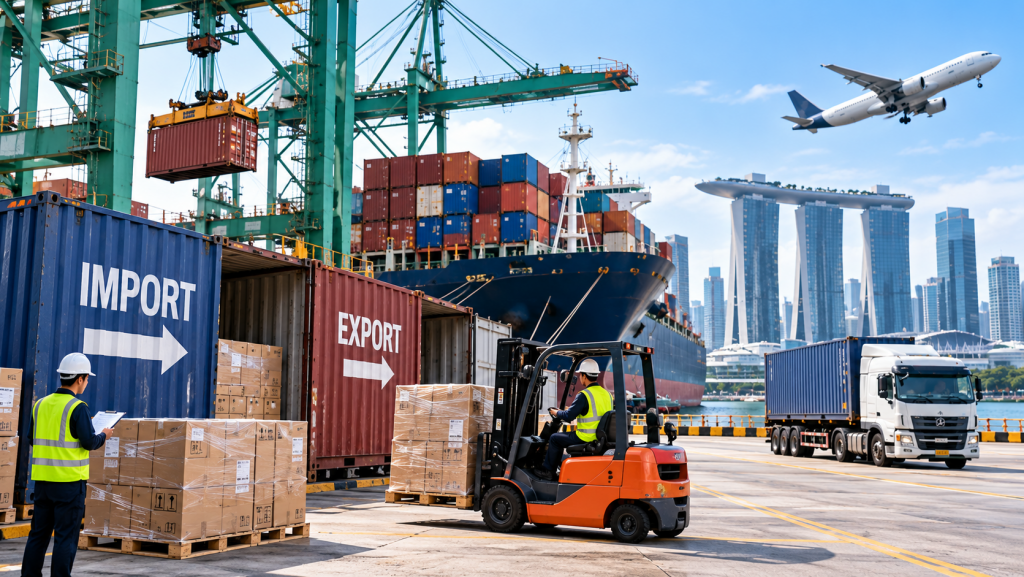
The first step is determining what type of trade activity is taking place. A shipment may involve importing goods into Singapore, exporting goods overseas, transhipping cargo through Singapore or moving goods under a specific Customs procedure.
The correct permit requirements depend on the nature of the movement, the Customs status of the goods and other regulatory factors. For example, importing goods for local consumption may involve different permit requirements from moving goods through Singapore without releasing them into the local market.
Step 2: Prepare the Shipping Documents
The declaring agent needs sufficient information to prepare an accurate application.
Common supporting documents include commercial invoices, packing lists, bills of lading or air waybills, and other documents relevant to the goods. Additional supporting documents may be necessary for controlled goods, preferential tariff claims or specialised trade arrangements.
The quality of the declaration depends heavily on the accuracy and completeness of the information provided.
Step 3: Check HS Codes and Regulatory Requirements
Goods are classified using Harmonised System (HS) codes, which are important for identifying the applicable Customs treatment and regulatory controls. An incorrect classification can result in inaccurate declarations, delays or potential compliance issues.
Businesses should also check whether the goods are subject to additional requirements imposed by Singapore’s competent authorities. Not all goods can be treated as ordinary, non-controlled merchandise.
Step 4: Submit the Permit Application Through TradeNet
Once the relevant information has been checked, the declaration can be prepared and submitted through TradeNet. The application is then processed according to the relevant regulatory requirements. Depending on the declaration and the goods involved, additional checks, supporting documents or approvals may be required.
Step 5: Review the Permit Outcome
A permit application may be approved, rejected or require further action.
An approval should be reviewed to ensure that the permit particulars and conditions are consistent with the shipment.
If an application is rejected, the reason should be investigated and the necessary corrections made before resubmission.
Step 6: Maintain Declaration Records
Businesses should retain the required trade documents and permit records for compliance and future reference. Singapore Customs generally requires relevant trade records to be kept for at least five years, subject to the applicable legal requirements.
7 Signs Your Business Should Outsource Customs Permit Declarations
Not every company needs to outsource its permit declarations. Businesses with established internal declaring teams may prefer to manage their own applications. However, outsourcing becomes worth considering when declaration requirements begin to affect daily operations.
1. Your Company Handles Only Occasional Shipments
Businesses importing or exporting goods occasionally may find it impractical to maintain an internal declaring function. Setting up internal capabilities involves more than learning how to complete a form. Companies that want to submit their own declarations must meet Singapore Customs’ registration requirements, including registering as a Declaring Agent and arranging access for an authorised Declarant. For companies with limited shipment volumes, appointing an external declaring agent may be a more practical alternative.
2. Your Shipment Volume Is Increasing
A company handling a few shipments each month may initially manage its documentation without difficulty. However, as shipment volumes increase, the number of declarations, supporting documents and regulatory checks may also grow.
An expanding importer might begin with occasional shipments from one supplier before adding multiple overseas suppliers and new product categories. Each additional shipment introduces another set of documentation and compliance requirements. Outsourcing can provide additional operational capacity without requiring the business to build an entirely new internal declaration team.
3. Your Employees Spend Too Much Time on Permit Applications
Preparing Customs declarations requires attention to detail. Staff must verify shipping information, check product classifications, communicate with relevant parties and resolve discrepancies before submission.
When employees are already managing purchasing, logistics coordination and customer enquiries, declaration work can compete with their other responsibilities. Engaging a declaring agent can allow internal employees to concentrate on their primary operational duties while a specialist handles the declaration process.
4. Your Business Handles Different Types of Shipments
Not all shipments follow the same Customs procedures. A business may handle ordinary imports, exports, temporary imports, re-exports or transshipments. Different transactions can involve different permit requirements, supporting documentation and permit conditions.
A declaring agent familiar with multiple shipment scenarios can help businesses identify the information required for each application. This is particularly useful for freight forwarders and logistics companies serving customers across different industries.
5. Your Company Frequently Encounters Documentation Problems
Incorrect or incomplete documentation is a common source of difficulty during the declaration process. Examples include discrepancies between commercial invoices and packing lists, inconsistent cargo descriptions, missing shipment information and incorrect quantities.
A declaring agent can help identify potential discrepancies before submitting an application. However, the importer or exporter must still provide accurate and complete information. The declaring agent cannot independently verify every commercial fact about a shipment.
Singapore Customs specifically emphasises that exporters should provide complete supporting documents and clear instructions to their declaring agents.
6. Your Business Does Not Have a Dedicated Customs Declaration Team
Maintaining an internal declaration function requires trained personnel, appropriate system access and procedures for handling trade documentation. Singapore Customs requires registered Declarants to meet competency requirements, including passing the relevant Customs Competency Test before registration.
For companies whose main business is retail, manufacturing, distribution or freight coordination, developing an internal declaring team may not be their preferred use of resources. An external declaring agent can provide an alternative arrangement.
7. Your Business Needs Better Operational Continuity
A company that depends entirely on one employee for permit declarations may face disruption when that person is unavailable. Annual leave, medical leave, staff turnover or unexpected workload increases can affect the company’s ability to process applications.
Outsourcing some or all declaration work can help reduce dependence on a single internal employee. Businesses should nevertheless discuss service coverage, submission procedures and escalation arrangements with their appointed agent.
In-House vs Outsourced Customs Permit Declaration: Which Is Better?
The decision depends on shipment volume, internal resources, costs and the complexity of the goods being traded.
Consideration | In-house declaration | Outsourced declaration |
|---|---|---|
Personnel | Requires internal capability | External declaring team |
TradeNet access | Business arranges its own eligible access | Agent uses its authorised declaration arrangements |
Operational control | Managed directly by company | Shared workflow with service provider |
Staffing | Internal staffing and training | Service fees and coordination |
Shipment knowledge | Direct access to internal teams | Requires clear information from customer |
Compliance | Internal controls required | Both trader and agent have applicable responsibilities |
Scalability | Depends on staffing and systems | Depends on provider capacity and agreed service levels |
For businesses handling high declaration volumes, an internal team may offer closer day-to-day control. For companies with fluctuating volumes or limited internal expertise, outsourcing may be more practical.
Some businesses may also adopt a hybrid arrangement, retaining internal capabilities while engaging an external agent for selected shipments or additional support.
What Responsibilities Remain With the Importer or Exporter?
One important misconception about outsourcing is that appointing a declaring agent removes all responsibility from the business. That is not the case.
Singapore Customs places obligations on declaring entities, declaring agents and individual Declarants according to their respective roles. Importers and exporters must ensure that the information provided is accurate, understand the goods involved and comply with applicable permit conditions. Declaring agents must also meet their own due-diligence, declaration accuracy and recordkeeping obligations.
Businesses should therefore maintain proper communication with their appointed agent. For example, if a supplier changes the quantity or product description after the original invoice was issued, the business should notify its declaring agent promptly. Similarly, if the goods require additional approvals, the relevant requirements should be addressed before the cargo is moved. Outsourcing works best when both parties understand their responsibilities.
What Should Businesses Look for When Choosing a Customs Declaring Agent?
Selecting a declaring agent should involve more than comparing service fees. A business should consider whether the provider has relevant experience, appropriate registration, reliable communication procedures and the ability to handle its shipment requirements.
Experience With Different Permit Types
A provider familiar with import, export, transhipment and other applicable permit procedures may be better suited to businesses handling varied shipments. Companies should explain their cargo types and shipment arrangements before engaging a service provider.
Understanding of Singapore Customs Requirements
Declaring agents should understand TradeNet procedures, declaration accuracy requirements and the regulatory obligations associated with their work. Singapore Customs maintains a governance framework for Declaring Agents that addresses competency, internal controls and compliance performance.
Clear Communication
An effective declaring agent should be able to identify missing information, explain documentation requirements and communicate application issues. Businesses should understand how to submit their documents and who to contact when clarification is needed.
Service Availability
For logistics companies operating across different time zones, declaration requirements may arise outside conventional office hours. Businesses should confirm the provider’s actual service coverage, submission arrangements and any conditions affecting urgent requests.
Transparent Charges
Service fees may vary according to permit type, complexity, additional documentation and other handling requirements. Companies should request a quotation and clarify what is included before engaging a provider.
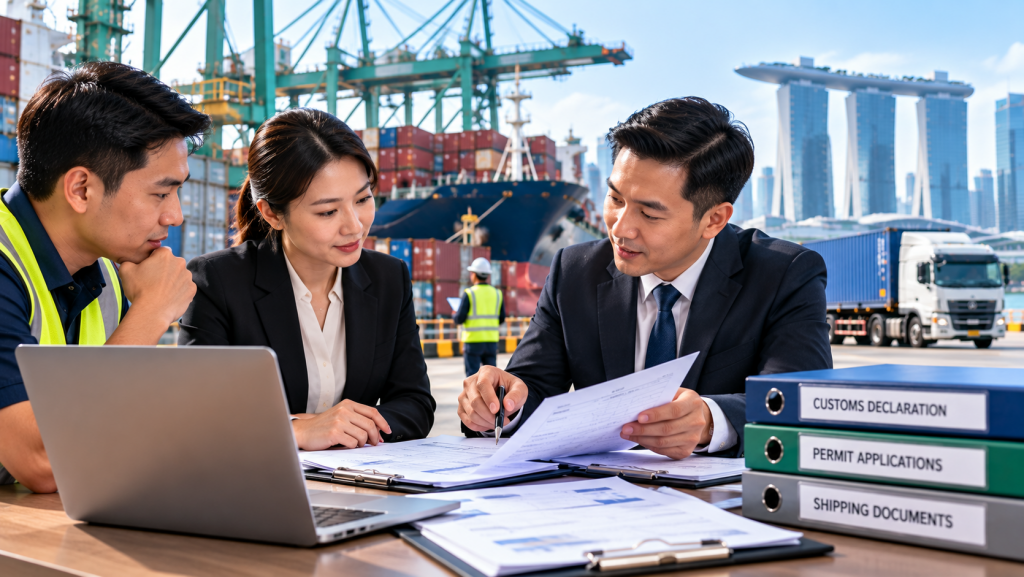
How to Appoint a Customs Declaring Agent in Singapore
Before a declaring agent can process applications on behalf of a business, the necessary Customs account and authorisation arrangements must be considered. The general process includes the following steps:
Obtain a UEN. Businesses should have a valid Unique Entity Number issued by ACRA or another relevant UEN issuance agency.
Activate the Customs Account. The business must activate its Customs Account before permit applications can be submitted for its shipments.
Select a registered Declaring Agent. Discuss the types of shipments, expected volumes, supporting documents and service arrangements.
Complete applicable authorisations. Where the declaring agent needs to use the company’s Inter-Bank GIRO arrangement for duties or GST payments, the relevant Customs authorisation is required.
Provide shipment documents and instructions. Establish a clear process for sharing invoices, packing lists, transport documents and regulatory approvals.
Review declaration outcomes. Check permit details and comply with all conditions before proceeding with the relevant cargo movements.
Singapore Customs explains the applicable Declaring Agent authorisation requirements on its official Declaring Agent Authorisation page.
Why Choose Declarators for Customs Permit Declaration Services?
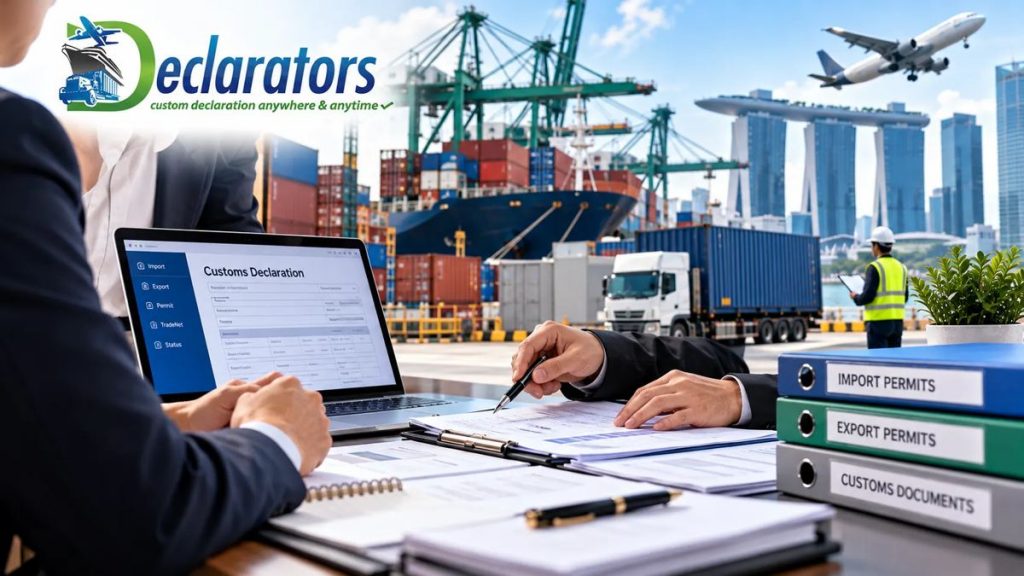
Declarators provides professional Customs permit declaration services for businesses involved in international trade and logistics. The company supports permit declaration requirements across air, sea and road shipments and offers related services such as Certificate of Origin and ATA Carnet applications.
Declarators also provides local motorbike courier services, manpower deployment and international handcarry services, giving businesses access to complementary operational support. According to its company information, Declarators’ Declarants have passed the relevant Singapore Customs competency requirements. The company also states that it holds ISO 9001:2015 and bizSAFE Level 3 certifications.
For importers, exporters and freight forwarders seeking an external declaration provider, Declarators can assist with understanding the documentation and service arrangements relevant to their shipments.
📞 Call us: +65 6385 2155
📧 Email: group@declarators.com.sg
🌐 Visit: www.declarators.com.sg
Declarators – Your Trusted Declaring Agent in Singapore.